X


Intelligent construction is the general trend, and the Ministry of Housing and Urban-Rural Development is promoting construction robots
2025-08-20 16:00:54
Source: Ministry of Housing and Urban-Rural Development official website
Recently, the official website of the Ministry of Housing and Urban-Rural Development released the "Notice on Issuing a List of Replicable Experiences and Practices (First Batch) for the Coordinated Development of Intelligent Construction and New Building Industrialization". The notice pointed out that various regions have actively explored digital design, intelligent production, intelligent construction and other aspects, and have made great progress in promoting the coordinated development of intelligent construction and new building industrialization. The Ministry of Housing and Urban-Rural Development has summarized the experiences and practices of various regions and formed the first batch of lists for guidance and study.

The list released this time is the test result after the implementation of the "Opinions" and has considerable guiding significance for the future development of intelligent construction. It is worth noting that in this first list, construction robots have become a focus. Among them, the research and development and application of intelligent construction equipment such as construction robots have become one of the key tasks, and three major measures are listed:
(I) Popularize Surveying Robots and Intelligent Surveying Tools
1. Utilize drones for earthwork measurement. With one click, they collect terrain information and rapidly calculate earthwork volumes using proprietary software. This is 40 times more efficient than manual labor and can save over 20% in costs. 2. Utilize 3D surveying robots. These robots automatically plan their paths to the area to be measured, using point cloud scanners to quickly and accurately measure the flatness and verticality of walls and columns. 3. Utilize intelligent field measurement tools, including smart rulers, smart distance meters, smart tape measures, and smart angle rulers. These tools transmit data to mobile clients via Bluetooth, automatically generate statistics, and upload them to the cloud. This eliminates the need for counting and reading measurements, improves measurement efficiency and accuracy, and enables intelligent data analysis.

(II) Promote the Application of Robotic Component Manufacturing
1. Focusing on key factory production processes such as rebar fabrication and installation, mold installation and removal, concrete pouring, steel component cutting and welding, and partition board and integrated kitchen and bathroom fabrication, promote process digitization and the use of construction robots. 2. Intelligent rebar tying robots are being used to tie bay window reinforcement mesh cages. These robots can automatically grip and construct rebar, visually identify and track rebar, and automatically tie rebar nodes, achieving three times the efficiency of manual tying. 3. Mold installation and removal robots, based on automatically analyzed component information, automate the entire production process, including edge mold identification, transportation, oil spraying, sorting and warehousing, marking, and mold placement.

(Ⅲ) Accelerate the research and development of construction robots and intelligent engineering machinery and equipment
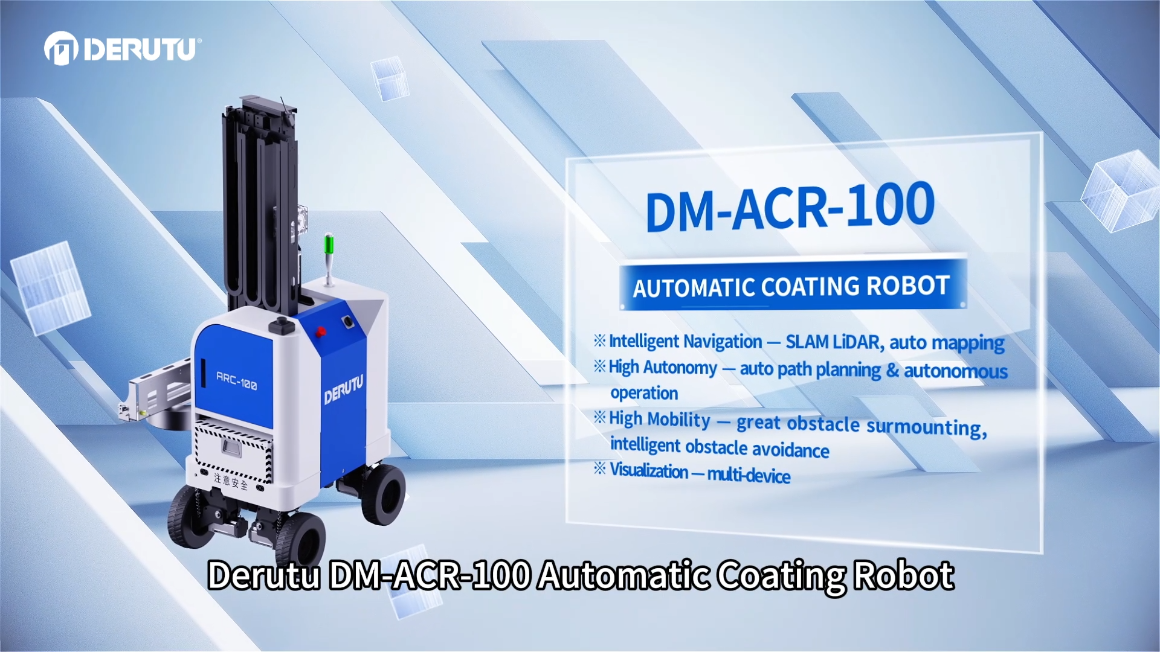
1. Strengthen the research and development and application of construction robots in on-site construction processes such as material distribution, rebar processing, spraying, laying, paving, partition board installation, and high-altitude welding, replacing "dangerous, complex, dirty, and heavy" construction operations. 2. Promote the application of intelligent construction machinery and equipment, such as intelligent tower cranes, intelligent concrete pumping equipment, self-elevating intelligent construction platforms, and intelligent transport equipment, to improve construction quality and efficiency.