X


Machine plastering has a bright future in the construction industry
2025-07-25 13:58:25
Machine plastering (i.e. wall plastering construction through automated or intelligent equipment) has a bright future in the construction industry, mainly due to multiple factors such as technological progress, labor shortage, cost-effectiveness improvement and policy support. The following is an analysis of the main development prospects of machine plastering
Market demand growth Labor shortage and aging: China's construction industry faces problems of insufficient labor supply and aging workers. In 2023, the proportion of construction industry employees over 40 years old is significant, and young people are less interested in the construction industry.
Cost pressure: The cost of manual plastering continues to rise, while machine plastering can significantly reduce long-term labor costs. For example, a plastering robot can complete 300 square meters a day, which is 5-8 times more efficient than manual labor, and can save 10 yuan per square meter.
Improved construction quality: The hollowing rate of machine plastering is only 1/30 of that of manual labor, and the vertical flatness pass rate is ≥95%, which is much higher than manual operation.

Technology-driven development Intelligence and automation: Modern plastering robots use AI, LiDAR, machine vision and other technologies to automatically identify wall contours, adjust plastering thickness, and achieve 24-hour continuous operation.
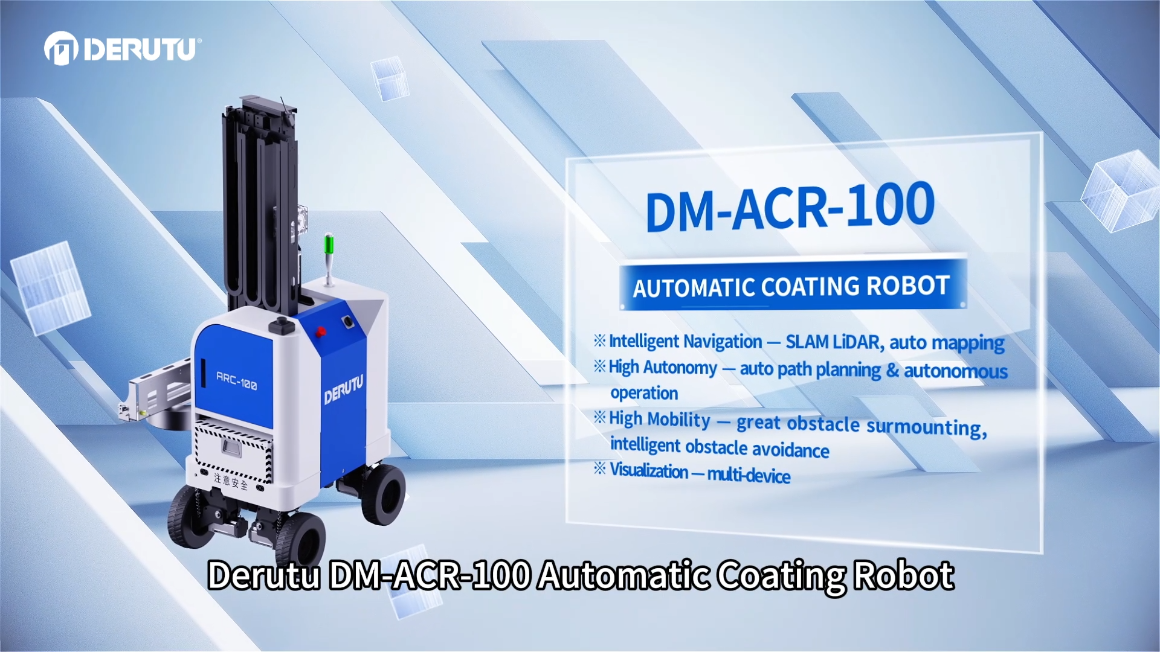
Patented innovation: For example, Derutu's "Mortar Spraying Robot PC18 Spraying Machine and DM leading plastering machine have improved construction flexibility and efficiency.
Cloud data analysis: Some high-end models can optimize mortar ratios through the cloud to ensure consistency in construction quality.
Policy and industry trends

-Smart construction policy support: China promotes the intelligent upgrading of the construction industry and encourages the application of smart construction technology. Plastering robots, as one of the key equipment, have broad market space.
Green construction requirements: Machine plastering is powered by electricity to reduce pollution and meet environmental protection trends.
Market potential and commercialization progress
Global market growth: The global plastering robot market size will be approximately US$200 million in 2024 and is expected to reach US$328 million in 2031, with a compound annual growth rate of 7.4%.
Future development direction
Higher precision and adaptability: Combine AI and 3D vision technology to optimize construction capabilities in complex environments.
Modularization and collaborative operation: For example, Deruitu's plastering robot can be linked with other construction robots to form an intelligent construction chain.
Cost reduction and popularization: With the maturity of technology and large-scale production, equipment prices are expected to fall, promoting wider application.
The prospects for machine plastering are very optimistic, especially in high-rise buildings, large-scale projects and standardized construction scenarios. Although the current level of commercialization is still low, with technological breakthroughs, policy support and market demand growth, it is expected to become the mainstream construction method in the construction industry in the next 5-10 years.