X


The difference between manual plastering and machine plastering
2025-07-24 13:31:52
At present, the real situation of the wall plastering industry in construction projects is that 99% of it is still done manually. The labor intensity is high, the efficiency is low, the quality of the plastered wall cannot be guaranteed, and a large number of hollows, peeling, cracking, verticality, and flatness cannot be guaranteed. The rework rate is extremely high, resulting in a huge waste of manpower and material resources!
In the transformation and upgrading of mechanized construction of construction projects, there is a very important content, that is, the replacement of people by machines in the operation process. There are very realistic reasons for the emergence of machines replacing manual labor. Many engineers in the industry told us that the dilemma they are facing now is not that there are no projects or work. Instead, there are too many jobs, but not enough workers, and too few skilled plasterers. So it is difficult to undertake large projects. In order to solve this problem, many construction companies have begun to try to use machines to replace people more. This effort is in line with the concept of "Industry 4.0, artificial intelligence" that has been popular in recent years.
But this leads to two questions to answer.

Machine plastering (mechanized or robotic plastering) has significant advantages over traditional manual plastering, especially in terms of construction efficiency, quality stability, cost control and safety.
*1. High construction efficiency
Large construction area per day
- Traditional manual plastering is about 30-50㎡ per person per day, while machine-sprayed mortar equipment can complete 500-600㎡ per day.(Take Derutu PC 16 spraying machine as an example)
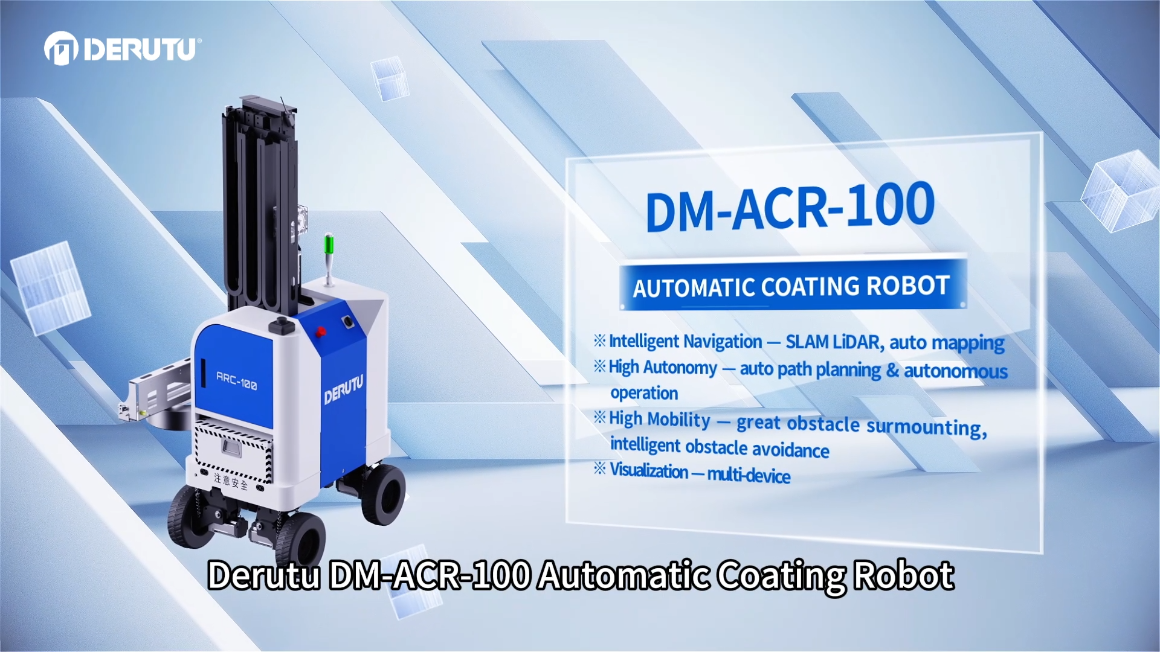
- The daily construction volume of a single plastering robot can reach 300-400㎡(derutu DM leading plastering machine), with a record of 708㎡/day, which is 5-10 times more efficient than manual work.

Continuous operation: The robot can work 24 hours a day, regardless of weather conditions, greatly shortening construction time.
2. Stable quality and high precision
Flatness and verticality control
The flatness error of machine-sprayed mortar is ≤4mm/2m, and some robot construction can reach ±0.3mm.
Traditional manual plastering is prone to hollowing (0.7%-1.2%), while the hollowing rate of robots is less than 0.08%.
Accurate material ratio: premixed mortar reduces the risk of cracking, and mechanical spraying ensures uniform thickness.
3. Lower overall cost
Reduced labor costs:
Robot construction only requires "two people per machine" to replace the traditional 8-10-person team, saving about 900,000 yuan in labor costs annually.
Reduced material loss:
Machine spraying mortar uses about 30% less than traditional mortar (such as 14kg/㎡ vs. 20kg/㎡).
Shortened construction period: For example, the 100,000㎡ plastering of the Suzhou Langshi project was completed in only 40 days, saving 50% of the time compared to manual labor.
4. Green and environmental protection
Reduced dust and waste: Closed transportation reduces pollution, and wet mortar technology optimizes material use.
Energy saving and consumption reduction: Lightweight mortar reduces building loads, and pneumatic transportation reduces vertical transportation energy consumption.
5. Improved safety
Reduced risks of high-altitude operations: Robots do not require scaffolding to avoid worker falls.
Strong adaptability to harsh environments: Can wade 30mm, climb 10°, and adapt to complex construction sites.
6. Standardization and intelligence
Digital technology: Robot parametric construction, avoiding human errors and strong quality consistency.
BIM collaboration: combining path planning and real-time modeling to optimize the construction process.